

In the world of gaming, developers have one mission at the heart of it all: keeping the fun alive for the long haul. Of course, for developers focused on short-term profits, this principle does not apply. A great developer strikes a balance between monetization and player experience, ensuring that even low-spending players can enjoy the full depth of the game without feeling pressured to make purchases. Put simply, a game should never serve only high-paying players. To ensure healthy, long-term growth, developers must let free users experience the full game, avoiding a rapid slide into “pay-to-win” or steep paywalls.
With that in mind, today, we use the classic strategy game Evony series as a case study to explore Evony’s journey from browser to mobile, delving into how Top Games and CEO David Guo (郭耀琦) have approached sustaining long-term fun, balancing free and paid players, and shaping their development and team strategies.
Evony in the Browser Era
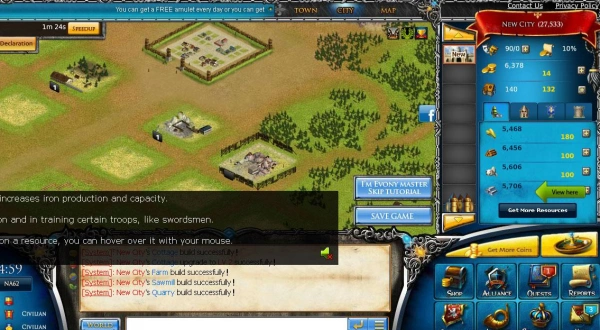
Evony made its debut in 2009 as a purely browser-based game, and by 2012, ownership had shifted to uCool. At the time, its core concept was groundbreaking: players could construct and manage empires entirely within a browser, no client download required. Although technically possible, porting a complex MMORTS from a traditional client to the browser demanded exceptional foresight—most doubted that web-based games could compete with console or PC experiences. Evony defied those expectations, successfully bringing the depth and complexity of client-side strategy games to the browser.
The “Age” series quickly cultivated a dedicated community, attracting even hardcore strategy enthusiasts. Developers attribute part of Evony’s appeal to the freedom it gives players to craft their own actions, narratives, and in-game drama. Unlike MMORPGs, whose longevity often hinges on launching new worlds, strategy games thrive by fostering environments that continually draw players back.
The game’s growth was swift and impressive: by February 2010, registered users had reached 15 million, and by its first anniversary in May, the number had soared past 19 million—a surge fueled by free access and reliable servers. In 2015, he founded Top Games, Inc., a company now dedicated to mobile game development, creating multi-genres such as strategy, RPG, and match-3.
David Guo: Game Changer
As Guo notes, “Mobile gaming is now pivotal, in fact, to everything we do at Top Games Inc.”
Mobile Evolution – Evony: The King’s Return
In 2016, with mobile devices becoming ubiquitous and Guo forecasting a surge in mobile gaming, Evony transitioned from browser to mobile. On April 27, 2016, Top Games launched Evony: The King’s Return on iOS.
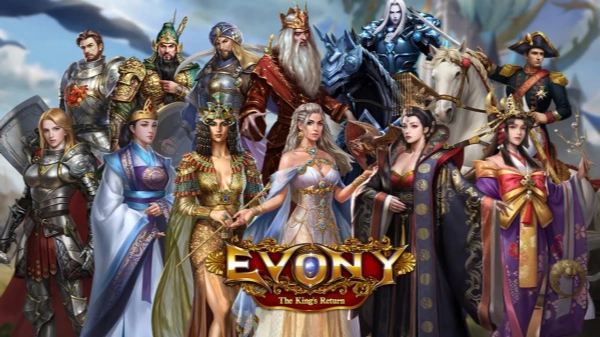
This iteration brought real-time strategy to mobile devices, refining multiplayer interactions for on-the-go play. Troops could be deployed, and cities managed through intuitive swipe gestures, while players recruited historical generals from diverse civilizations—Arthur for Europe, Oda Nobunaga for Japan—each providing unique civilization-specific advantages. To ensure that everything balanced perfectly, the mobile version preserved the series’ core strategic depth while adapting the interface for touchscreens, marking a seamless and successful transition to a new platform.
Free Player Experience
Evony: The King’s Return follows a free-to-play model. Core gameplay—city building, resource management, troop training, and multiplayer combat—is fully accessible without payment. Daily logins grant resources, gold, and speed-up items, while quests and limited-time events provide gems and equipment essential for progress. Strategic resource and time management allow free players to achieve notable milestones, such as reaching a level-34 fortress, amassing 230 million power, and earning event rewards like wings. The design emphasizes efficient play and active participation over high expenditure.
Gameplay Over Ads
Top Games believes in letting gameplay sell itself, rather than relying on flashy advertising. When revenue depends on player engagement, the game must be the draw. Highlighting features for the right audience is far more effective than over-promising. Misaligned expectations quickly breed frustration, but precise targeting ensures that players’ experiences align with their expectations, increasing the likelihood of payment and word-of-mouth promotion.
Therefore, in April 2025, the advertisement for the new game Run! Goddess reflected the true gameplay of the game, building trust and recognition among players who downloaded it. Players shared that the game’s advertising accurately reflected the gameplay, and they thoroughly enjoyed the fusion of RPG and action parkour elements.
Team and Project Management
Top Games prioritizes sensitivity to new technology, a curiosity for exploration, and strong analytical and problem-solving abilities in its team. High self-management and task-driving skills are equally essential. Through a flat, open, and autonomous platform, individuals are empowered to innovate, turning ideas into actionable projects.
Project management is equally critical. High-performing teams create thorough plans, set clear priorities, and synchronize efforts across departments. By streamlining workflows and fostering close collaboration within tight deadlines, they maximize productivity while maintaining a high standard of quality.
Final Thoughts
Through the analysis of the development journey of the Evony series, I hope readers can see that a great game is constantly updated and iterated, with the collective wisdom, innovation, and effort of the entire team. For free or low-spending players, developers should first focus on perfecting the core gameplay mechanics to ensure a solid foundational gaming experience. Then, by analyzing data, developers can gradually personalize player guidance, creating opportunities to increase average user revenue.
By providing personalized opportunities—such as push notifications, emails, or in-game events—developers can encourage players to make purchases. Limited-time rewards, rare items, or gacha draws tap into FOMO (fear of missing out), gently guiding free players toward more advanced gameplay or exclusive characters, eventually converting low spenders into paying users.